BGCP_14
Cup-marked and grooved slab
Site co-ordinates: 37.50/15.10
3D model here
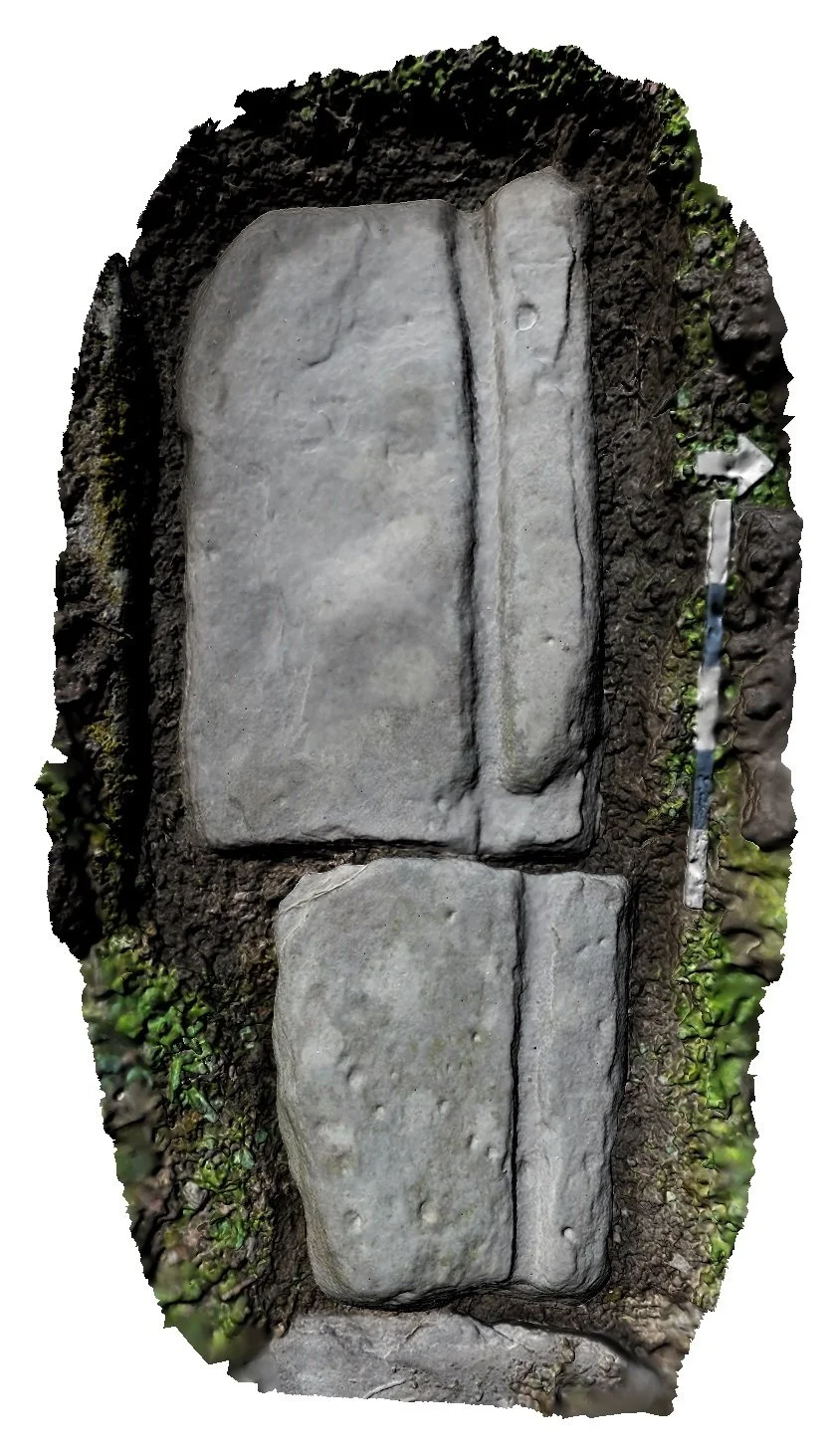
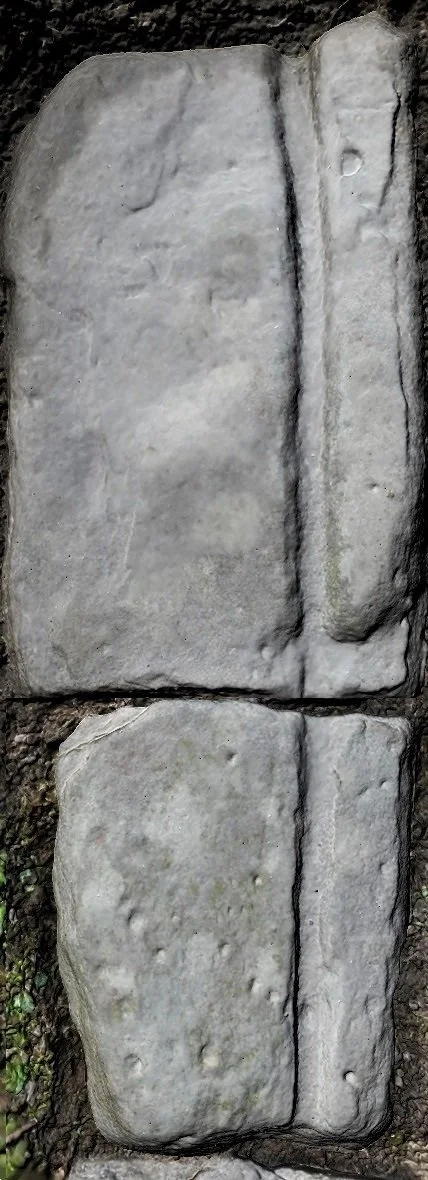
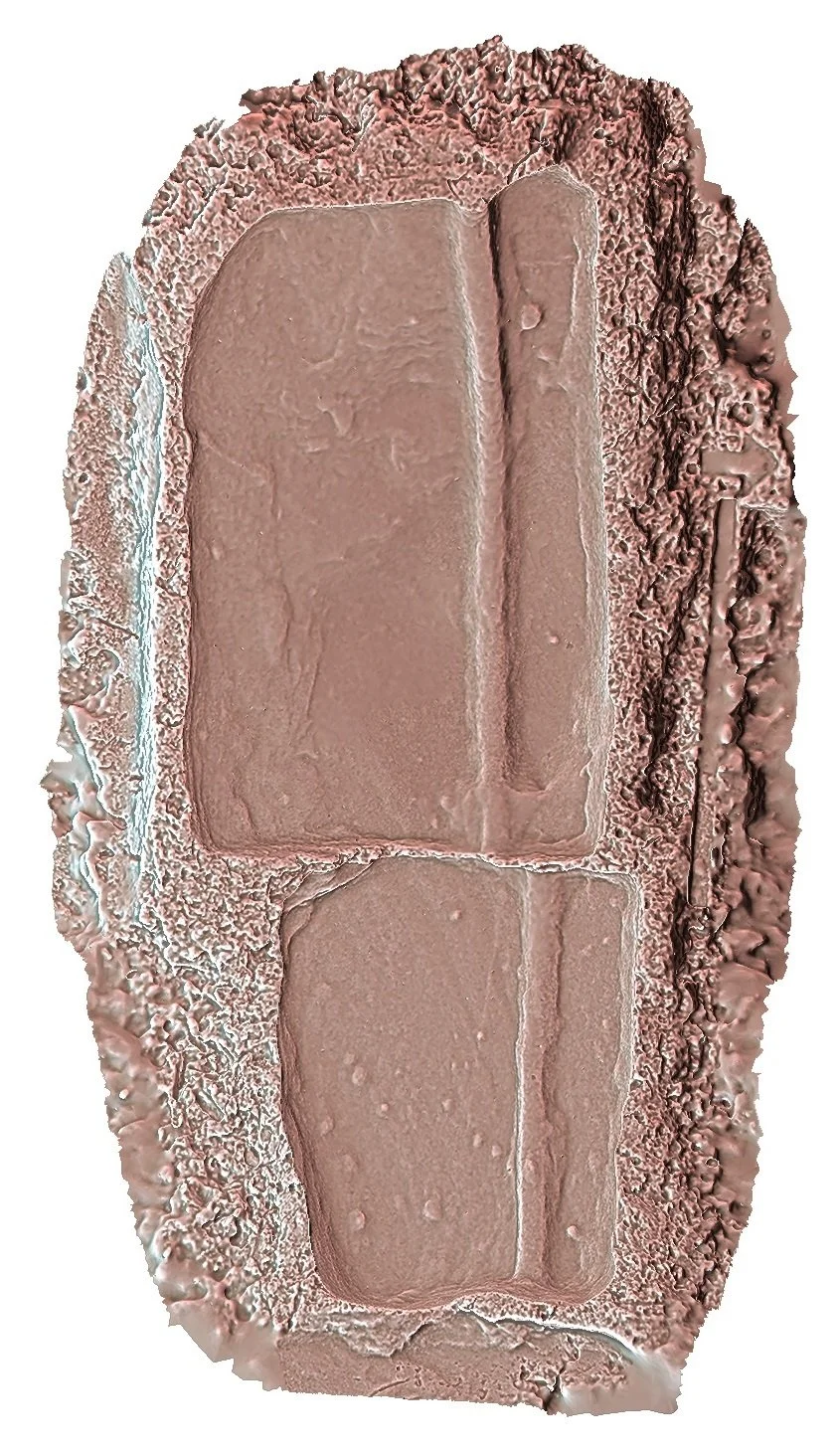
This slab comprises two pieces of stone that appear to originally have been a single slab. As they lie, they have an overall length of 1.51 m W–E. The larger W part is 0.95 m long and 0.60 m wide; the smaller E part is 0.61 m long and 0.47 m wide. Their N edges are slightly out of alignment, the E part lying 0.05 m further to the N. The E end of the smaller part abuts NNW–SSE aligned slab BGCP_13, but their stratigraphical relationship is not clear.
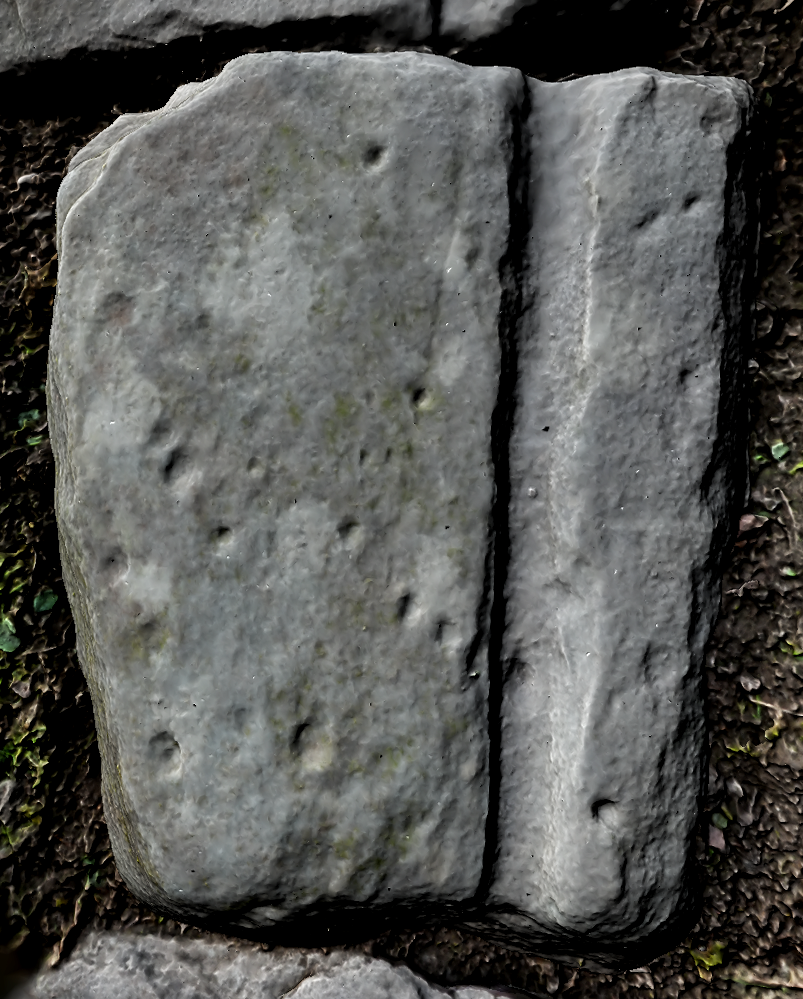
Both parts have a prominent groove, 50–70 mm wide and up to 20 mm deep running their full lengths, some 100–150 mm in from their N edges. The groove doesn’t appear to be part of any decoration relating to these stones’ use as a grave-slab. Instead. It may have have had some structural or architectural function, perhaps holding a wooden panel or frame, perhaps within the medieval church. The larger hole may relate to this function.
In addition, the E part has a number of small cupmarks, 20–30 mm in diameter, some of which were easily visible when the stones was cleaned. A number of other possible but smaller circular marks were revealed by the photogrammetry. Most of the cupmarks lie south of the groove on the E stone, although a few small possible cupmarks lie on the W stone, where there is also larger and more cylindrical hollow near its NW corner, to the N of the groove. Such cupmarks are likely to be of prehistoric (Neolithic) date, and their presence on the stone may have been one reason for its selection for whatever structural/religious function this slab may have had.
There appears to have been a potentially long history of different possible uses for these two pieces stones.
For further information on sources see BGCP Bibliographic References after the last entry.