BGCP_02 Angus Stone
Balquhidder Parish Church
NN 53568 20951
3D model here
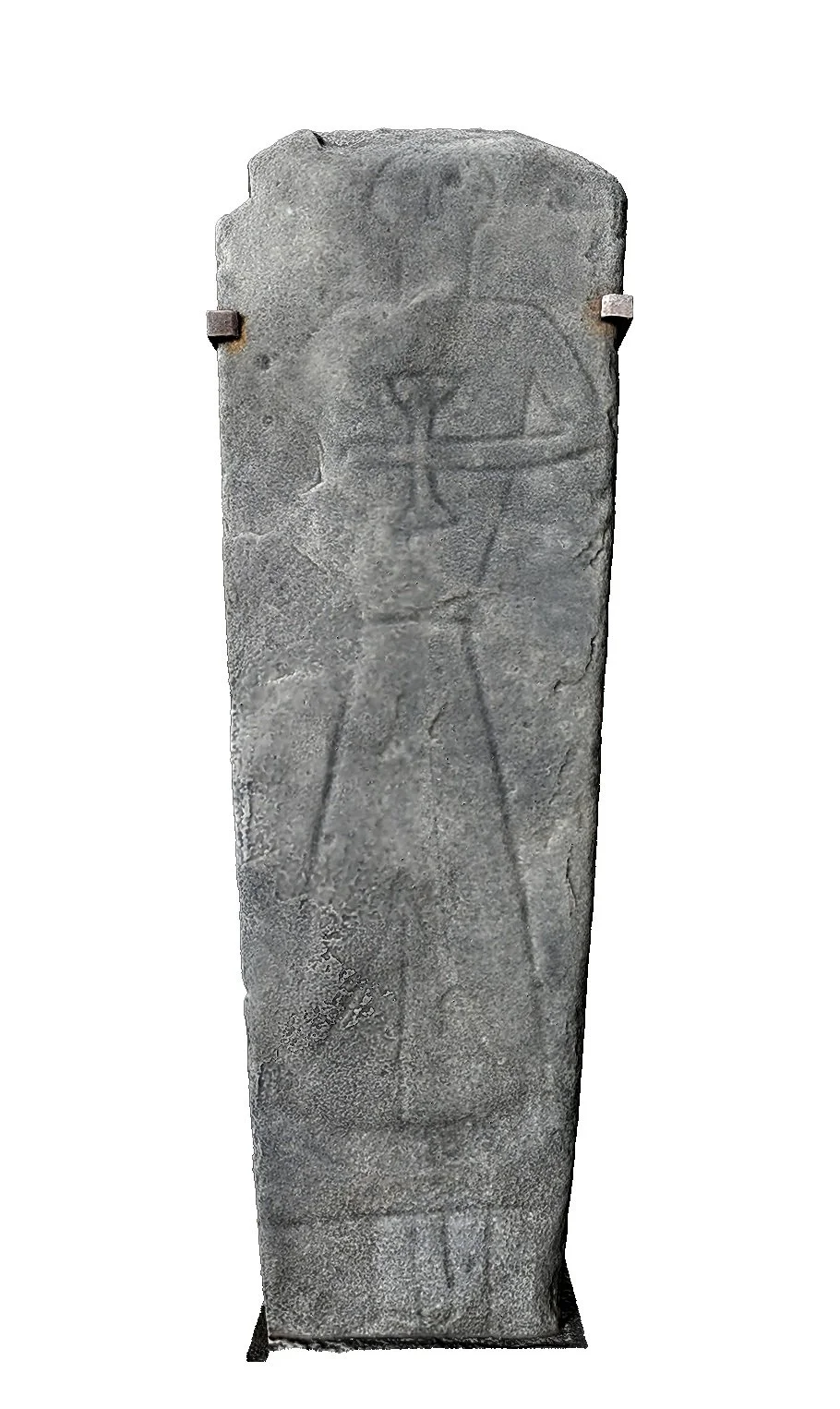
The slab as measurable is 1.63 m long, although it is set in cement to an unknown depth on the stone plinth on which it has stood since moved into the church in 1917. Stuart’s (1867) drawing, however, suggests that only the bottom 50–100 mm of the stone is not visible. It also suggests that the stone had a regular peaked head end, which appears to have since been damaged, although this hasn’t affected the incised effigy. The slab is 0.65 m wide at the head narrowing to 0.43 m at the foot.
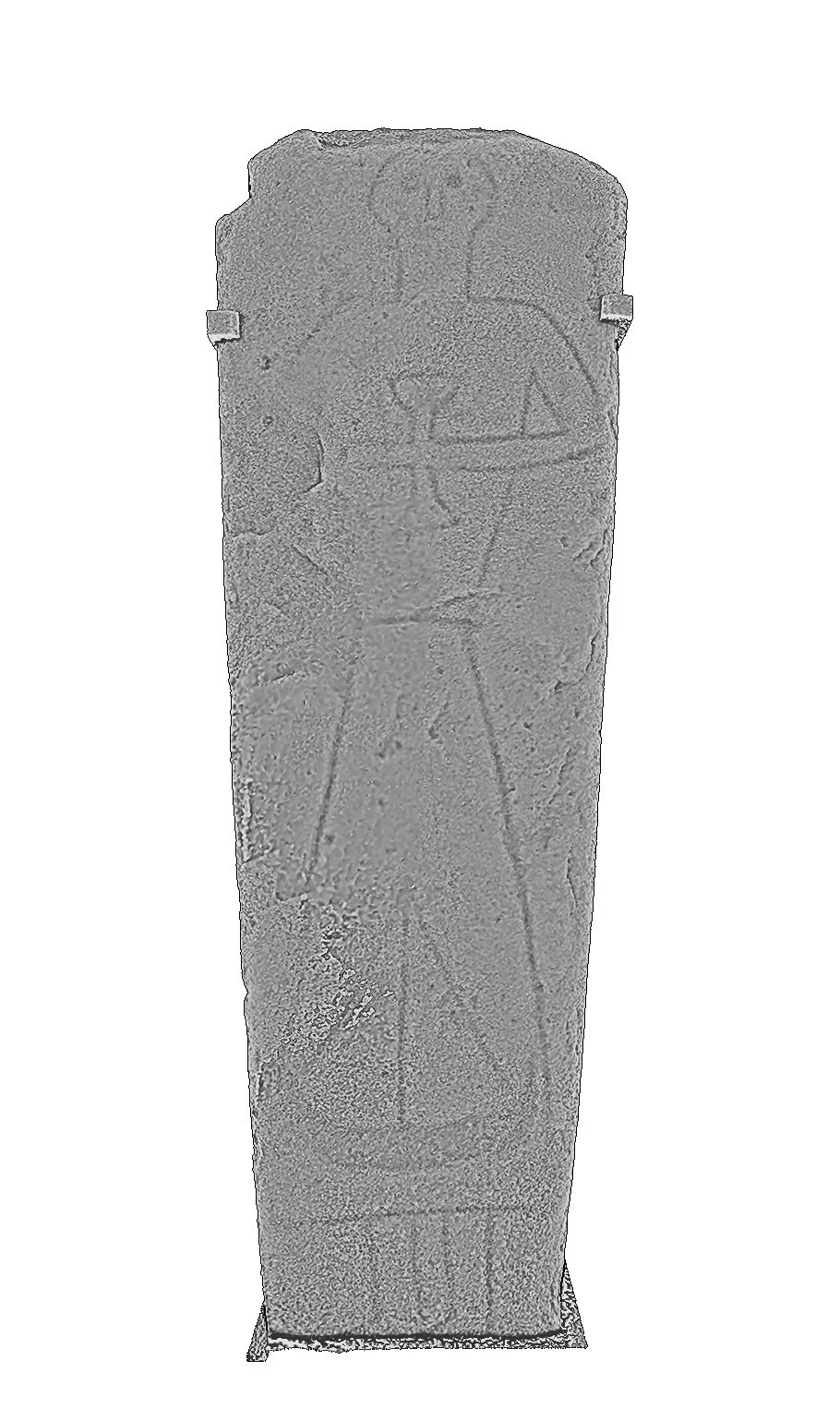
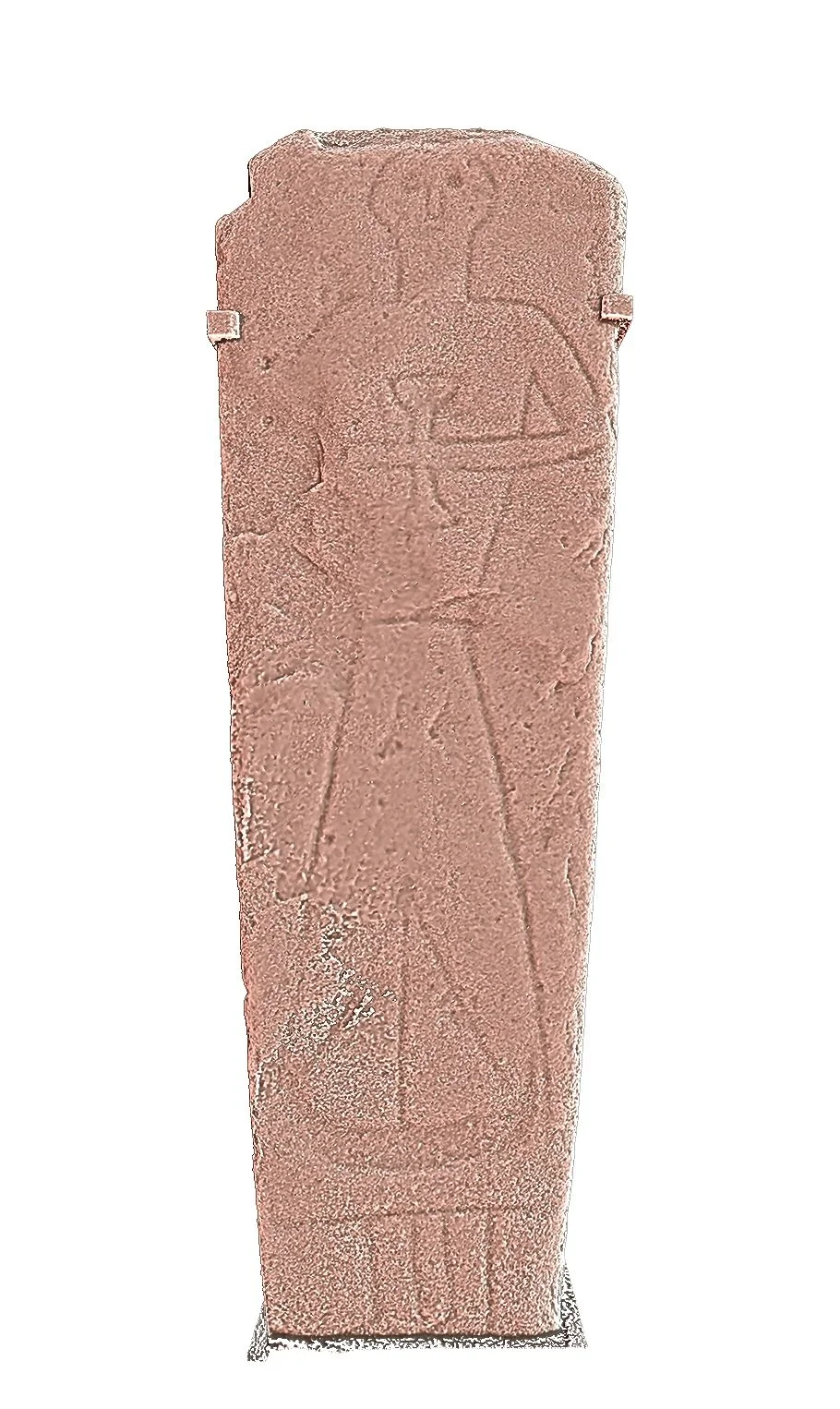
The carving is a rather crude and simple depiction of a full-size figure, which fills almost the whole surface of the stone. The photogrammetry appears to indicate that part of the stone’s surface along the upper left side has been lost, and with it the figure’s right arm. This damage appears to have occurred before Stuart’s depiction, in which all but the outer edge of the right arm is shown.
The figure has a round head and a long neck, with circular eyes, a nose, and a short line for the mouth. The elbows stick out from the sides of the body, the forearms horizontal and meeting across the chest, where they hold what appears to be a long-stemmed chalice with a rounded cup and triangular foot. This suggests that the figure was probably a priest. There is no detail indicating the hands, and the arrangement of the arms and chalice have the appearance of a cross with expanded ends at top and bottom.
There are no indications of clothing on the upper part of the body, although the torso narrows to 0.14 m at the waist (from 0.34 m at the shoulders), where a line suggests either a belt, of the upper edge a long skirt-like garment, which falls to just above the figure’s ankles. The feet point to the figure’s right.
A bisected triangular design covering the lower part of this garment was long considered, since Stuart first described it (1867, 33), to be part of the figure’s priestly vestments. However, K A Steer made a comment that this feature might represent a ‘galley?’, and support for this is provided by the photogrammetry. The apparent hull of the boat is represented by a curved area of shallow (false) negative relief, the only part of the carving not depicted by incised lines, with the bisected triangular design above representing the mast and the forestay and backstay.
For further information on sources see BGCP Bibliographic References after the last entry.