2. A boat out of water?
Do we have the image of a West Highland galley marooned a long way from the sea on our Angus Stone in Balquhidder, as discussed in Blog 1? You couldn’t pick a more diagnostic symbol of late medieval west coast iconography than a galley. These were the vessels of clan chiefs and lords, sometimes of mixed Gaelic/Norse descent, who raided and traded along the coastlines of Scotland and Ireland. They were symbols of status, power, and control of resources – they were expensive in the context of the West Highlands.
West Highland galleys were similar to earlier Scandinavian longships. They were single-masted with square sails (see images below), but unlike the longships, which had side-rudders, their rudder was attached to the stern. An early 1600s Scottish manuscript described larger galleys as having 18–24 oars and smaller vessels called birlinn having between 12–18 oars. The Gaelic word bìrlinn (Scots birlinn) may have come from a Norse word for a small cargo ship, although others have argued it derives from a Middle English word for a pole, spar or tent-sill (McWhannell 2017, 47). Denis Rixson, whose 1998 book The West Highland Galley is a great read, describes birlinn as ‘small, general purpose cargo boats that could double as a troop-carrier’. These small galleys were not only used to transport men and goods, and to carry off cattle, but also for fishing.
Birlinn were clinker built and could operate under sail or oar, be dragged up beaches, or penetrate sea lochs at speed. The replica galley Aileach, built in 1991 with larch resting on oak frames, allows us to imagine a birlinn at sea. More information on Aileach, now on display at Kildonan Museum, South Uist, can be found here.
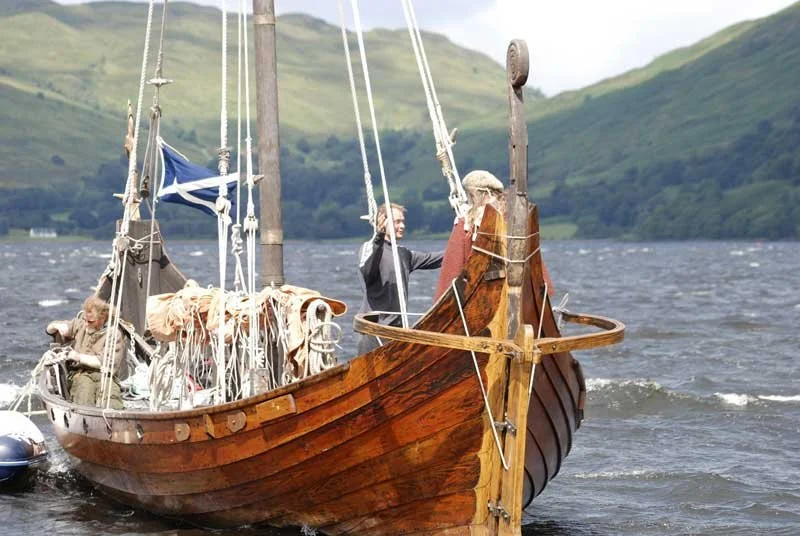
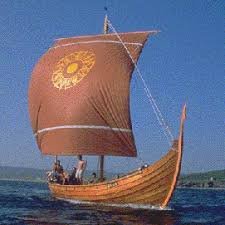
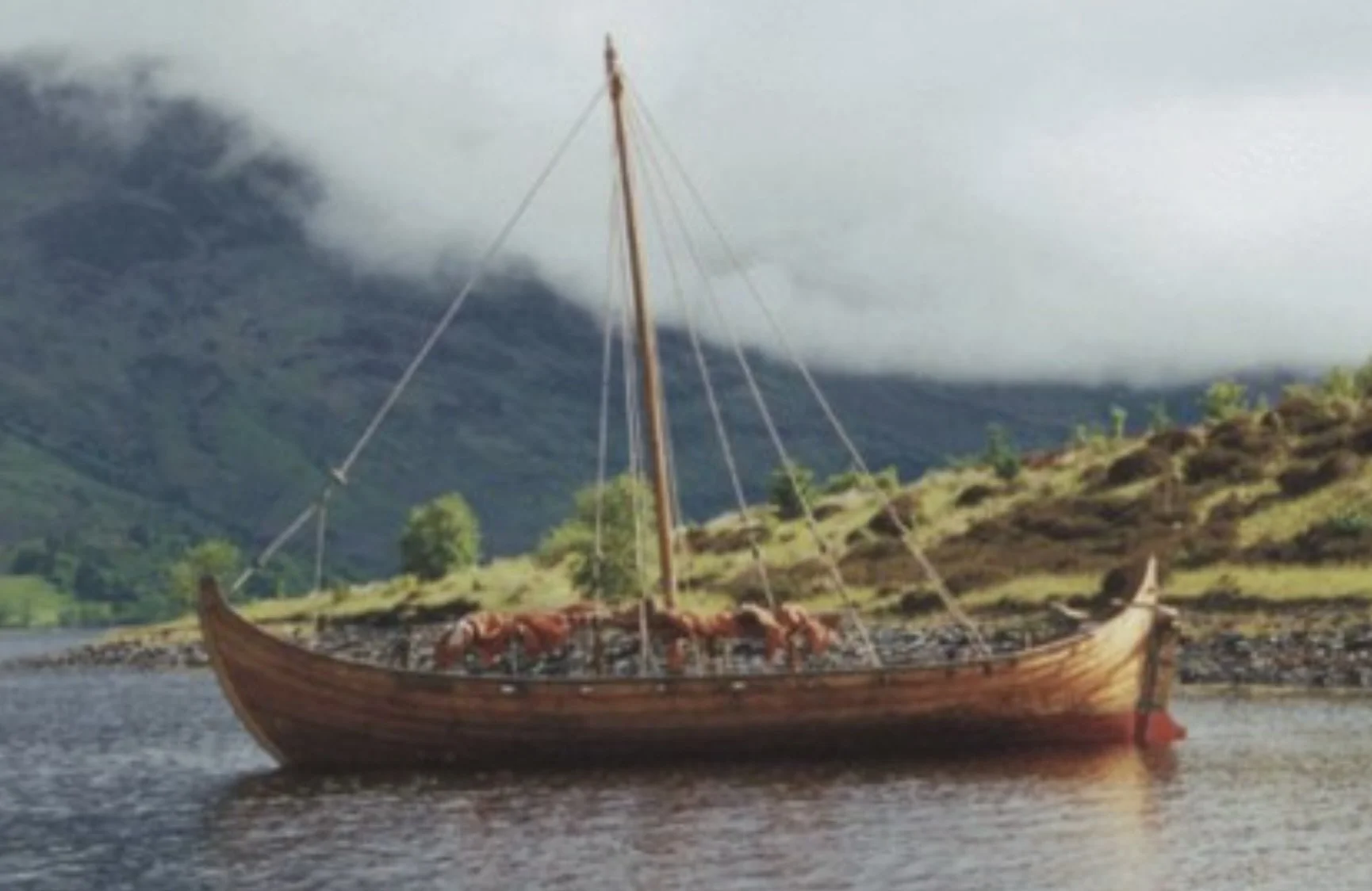
Birlinn replica, Aileach. Credit: Galley Aileach © wikimediacommons; https://www.mullofkintyre.org/
Little extant material evidence of a birlinn has survived and the design of the Aileach replica had to be based on rather restrictive evidence obtained from symbols found carved on graveslabs, effigies, free-standing crosses and graffiti; see Kilchattan Old Parish Church, Isle of Luing (here) and also Creagan, Appin.
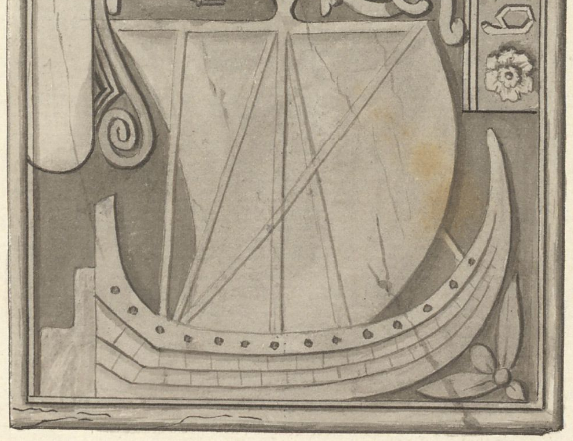
If there is a galley on our Angus graveslab in Balquhidder, it is crude and simplistic. We can compare it to the images of a birlinn (below middle), found on a memorial at Ardchattan Priory, on the banks of Loch Etive, north-east of Oban, and another on an 18th century engraving of a tomb in MacDufie's Chapel, Oronsay (below right).
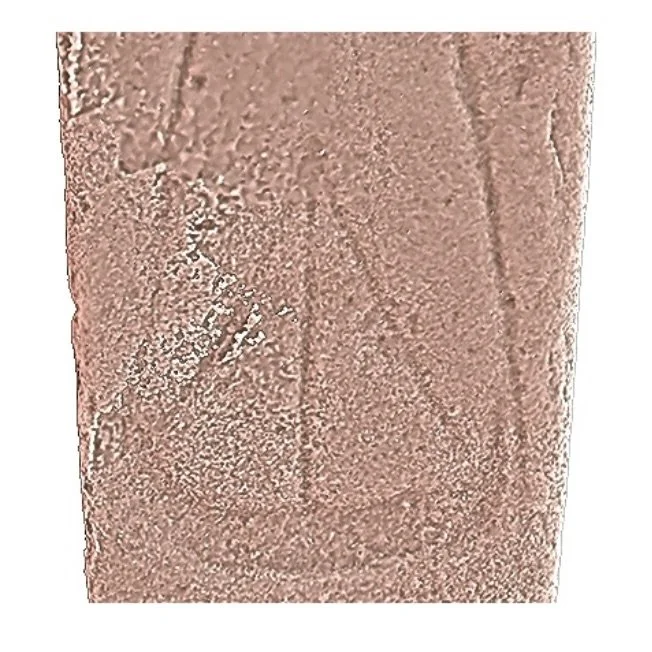
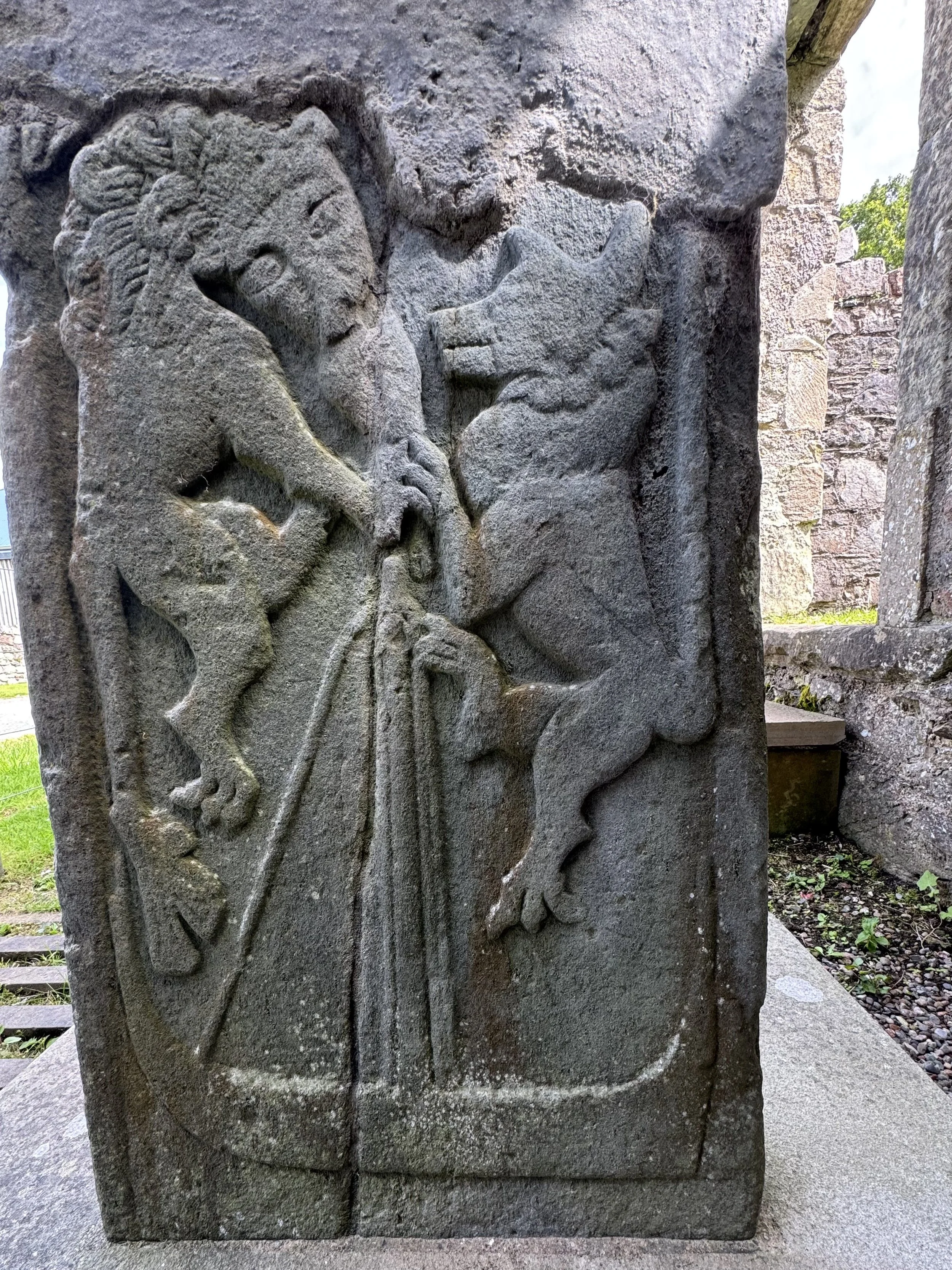
Photogrammetry image still of the Angus Stone, Balquhidder. Credit: BGCP
Cross-shaft dedicated to Prior Eugenius MacDougall (1500), Ardchattan Priory, Lorn. Credit: BGCP
MacDufie’s Chapel, Oronsay, 18th century engraving. Credit: Wikicommons.
The shape of the boat’s hull on the Angus Stone, with its stem and stern post, and its mast and stays, suggest it is a galley, even though, in common with a small number of other carvings of galleys, it has no sail and no oars. And although it seems to lack a rudder, and other details found on more accomplished and detailed carvings, this may be explained by the rather crude nature of the carving over the whole of the stone.
A few preliminary musings below, but more research is required. If you have anything to contribute, do get in touch.
The stone commemorates a particular cleric (or his patron) whose family originally came from the west. To date, the Angus Stone is one of only two graveslabs in Balquhidder kirkyard bearing a human image (the other being Rob Roy). This suggests he was someone of significance in the community.
Balquhidder is a glen that looks both east and west. In the medieval period, it was a parish in the diocese of Dunblane, which lies 45 miles to the south-east. Further research into the records may prove worthwhile. Is there a hint of fragmentary initials on the middle of the Angus Stone or are the marks natural? It is in any case difficult to determine when initials were first carved on graveslabs, which were often re-used.
Carved stones with galleys are sometimes found associated with churchmen on the west coast, such as on the lower part of a medieval cross-shaft at Ardchattan Priory, dedicated to Prior Eugenius MacDougall (see photograph above) or Abbot Mackinnon’s cross, Iona (see here). However, to date there are no known examples of a carving of a galley on a priest’s vestments.
Galley carvings on grave-markers and crosses are associated with churches, but they also seem to represent a secular sense of place and a shared naval heritage. Is the putative galley on the Angus Stone a visual reference to a common past of families migrating with Campbell expansion from the historic district of Lorn in the west to Balquhidder from the late 1400–1500s?
The galley or lymphad (a corruption of Scottish Gaelic long-fhata) was a heraldic charge associated with medieval Lords of the Isles. It was also adopted by MacDougall, and later Stewart, Lords Of Lorn. However, in 1470 Colin Campbell, Ist Earl of Argyll, acquired the Lordship of Lorn through marriage and, in 1475, he was appointed King’s Lieutenant, a jurisdiction which extended as far east as Balquhidder. The Galley of Lorn was from this date incorporated into the coat of arms of both the Earl of Argyll and the Campbells of Glenorchy, who became major players in the region and built a castle in the late 1500s at nearby Edinample, Loch Earn.
And finally. . .
The earliest illustration of the Angus Stone (in Stuart 1867) did not show the curved line which today suggests to us the hull of a galley. Instead, the associated elements of the carving were together interpreted as features of the priest’s vestments. However, while the photogrammetry did appear to reveal the clear image of a galley, these same elements of the carving do closely match the form and decoration of a set of priestly robes depicted on a number of west coast medieval carvings (see Blog 4). Was the sculptor, of what seems quite a simple carving, deliberately combining two distinct elements of iconography – a West Highland galley, and a distinctive feature of west coast priestly vestments?
Whether we are looking simply at a priest’s robes, or a combination of robes and a galley, is there a suggestion of a west coast influence on some of the pre-1800s graveslabs in Balquhidder? Earlier antiquarians and archaeologists seem to have thought so. James Drummond, for example, included illustrations of five Old Kirk graveslabs (including the one reputed to mark Rob Roy’s grave) in his 1881 Sculptured Monuments in Iona and the West Highlands. Later, Steer and Bannerman (1977, 205–6) examined the eastwards expansion of the authority of the medieval Lords of the Isles, and later Campbells, into Perthshire (where Balquhidder gets a mention). Did Steer have this in mind when he made that ‘galley?’ comment about the Angus Stone in the NMRS.
In Blog 3 “A glen that looks west ” we will explore this further.
* With thanks to Denis Rixson who has given generously of his time and knowledge towards the writing of this blog.
References
Drummond, J 1881 Sculptured Monuments in Iona and the West Highlands. Edinburgh, Soc Antiq Scotland
McWhannell, D 2017 Sailing times in the Norse Gaelic seaways, in P Martin (ed) Castles and Galleys: a reassessment of the historic galley castles of the Norse Gaelic seaways. Isle of Lewis, Islands Book Trust
Rixson, D 1998 The West Highland Galley. Edinburgh, Birlinn
Steer, K A and Bannerman J W M (eds) 1977 Late Medieval Monumental Sculpture in the West Highlands. Edinburgh, RCAHMS
Stuart, J, 1867 Sculptured Stones of Scotland Vol 2. Aberdeen, Spalding Club
Websites
https://www.trove.scot/place/24134#details
Extended references see here